
Secondary Glazing Styles
Search “types of secondary glazing” and you’ll find the same six terms everywhere: horizontal sliding, vertical sliding, tilt vertical sliding, hinged, lift out and fixed. What’s harder to find is which one you actually need.
Three key things about your primary windows help you decide: their shape, how often you open them, and how you clean them. Get those right and the choice mostly makes itself.
The general rule is that secondary glazing should match the sightlines and configuration of the primary windows they’ll be paired to. Don’t put a vertically sliding unit in front of a side-hung casement, as it won’t look right. Secondary glazing should be discreet and convenient without blocking the primary window. Bear in mind that secondary units can be coupled together, meaning you can match more complex primary window configurations with a combination of secondary units.
With that in mind, here’s how each secondary glazing option works and where it makes sense, with a link to a page for full specifications once you know what you’re looking for.
Horizontal sliding
The most common configuration, and the usual starting point for anything wide. Available with anything from two to five panels, based on requirements. Panels run side-to-side on tracks, so it doesn’t need clearance in front of the window the way a hinged unit does. That makes it the practical choice for wide openings, or rooms where furniture sits close to the wall.
It’s less convincing on a narrow window, where sliding buys you little over hinged. One panel always has to stay in place while the other(s) slide across, so you never get the full width open at once.
Full details: horizontal sliding secondary glazing
Vertical sliding
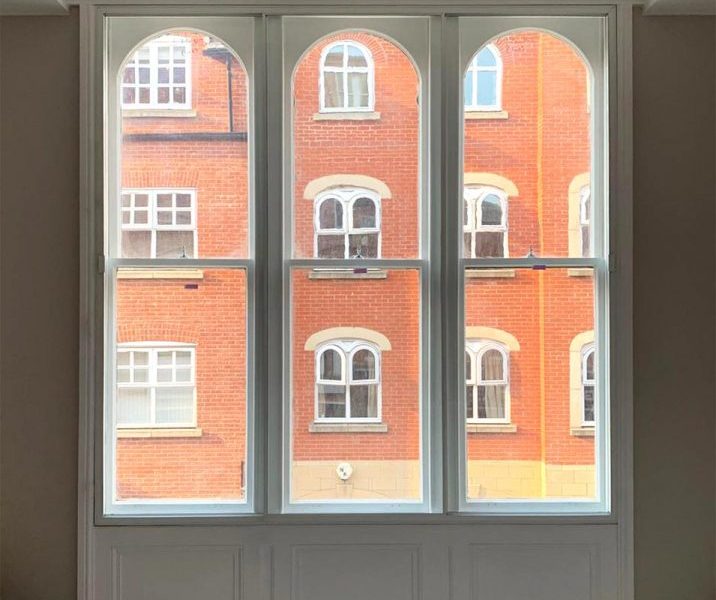
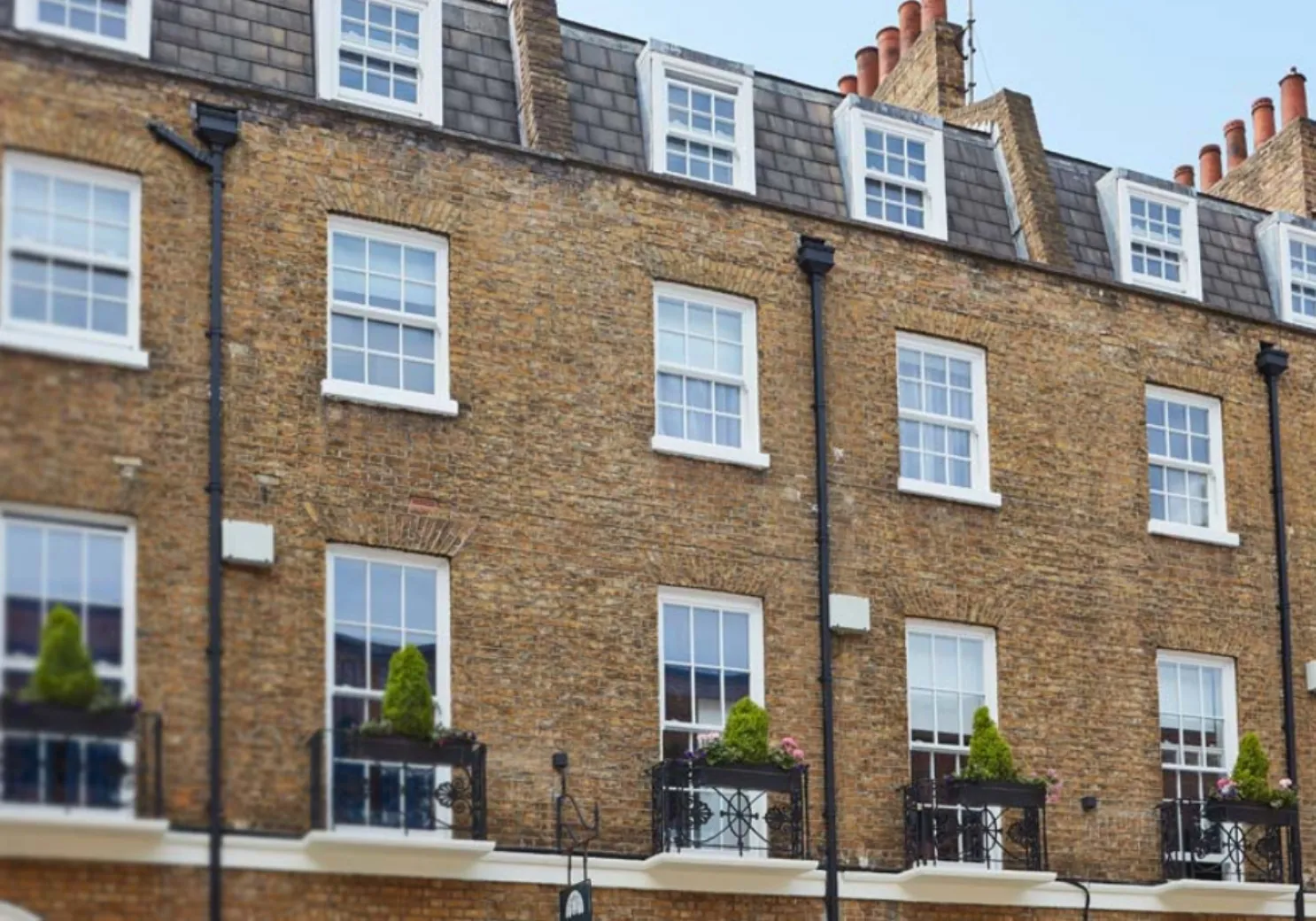
Built specifically to sit over a traditional sliding sash window, using tensioned balances so the secondary sashes open in the same way the original window does. It’s the natural fit for period sashes and one of the most common choices on traditional and listed buildings, because it echoes the window behind it rather than working against it. Standard vertical sliding doesn’t tilt, so cleaning the outer face of the glass means reaching up rather than folding the sash towards you. That limitation is solved by the deluxe version below.
Full details: vertical sliding secondary glazing
Deluxe tilting vertical slider
The same sash-style operation as standard vertical sliding, but with an added 45-degree tilt-in function, giving easier access to both sides of the glass. It earns its place wherever cleaning is important and/or difficult, which in practice is most upstairs sash windows. On a window you rarely open, the tilt function is a feature you’re paying for and not using.
Full details: Deluxe tilting vertical sliding secondary glazing
Hinged
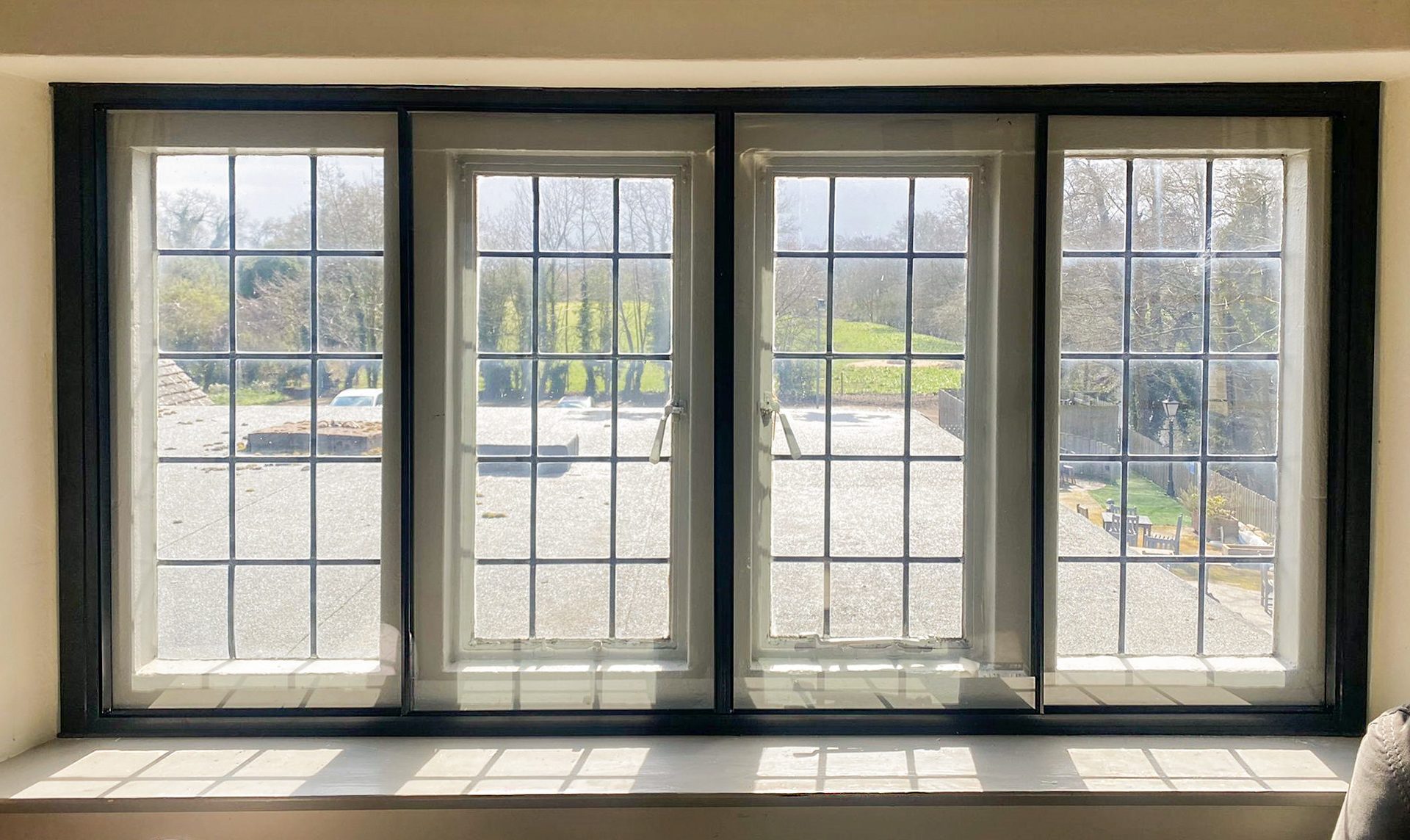
A hinged unit needs somewhere to swing into, so it’s not ideal behind a run of blinds, close-fitting curtains, or a worktop or furniture that’s higher than the window cill. Where there’s space for it, though, it gives the most complete access of any configuration: opening inwards and hung left, right, or at the top, depending on the room. It’s ideal for windows you use regularly, such as kitchens and utility rooms where ventilation is a daily job, not an occasional one.
Full details: hinged secondary glazing
Lift out
Panels that manually detach from the frame by hand. Discreet in place and, depending on size, easy to handle once removed. This suits windows you open occasionally rather than routinely, such as a bay window, a corner window, or anywhere too tight for a sliding or hinged mechanism. But it’s less convenient for anything opened regularly: lifting a full panel out and finding somewhere to put it down can be a chore.
Full details: lift out secondary glazing
Fixed
No opening mechanism, permanently sealed in place. The trade-off is straightforward: you give up access entirely, in exchange for the slimmest possible sightlines and a genuine edge on thermal and acoustic performance, since there’s no opening seal to break by opening. It also pairs well alongside an opening configuration within the same window, a fixed pane in one section of a bay with a sliding or hinged unit in another.
Only makes sense where you’re certain that window doesn’t need to open. If there’s any doubt at all, choose one of the opening options instead. It’s far easier to specify access you don’t end up using than to add it later.
Full details: fixed secondary glazing
How To Choose
Three simple questions cover almost all scenarios. What shape is the existing window and how should the secondary glazing match its openers? How often do you genuinely need to reach it: daily, occasionally, or never? And when you do, is reaching in enough, or do you need to clean both sides of the glass properly?
Answer those questions for each of your primary windows and the right style of secondary glazing should become clear. If it doesn’t, because your primary window is more complicated, then a combination of coupled secondary units may be the answer.
But most importantly, every Incarnation installation is surveyed and fitted by your chosen window installer, who will confirm what’s possible for your windows before anything is made. We can help by suggesting an installer that’s local to you.
/